We're going to explain in a simple way the basic concepts behind pressotherapy, who can benefit from it, how it can even be done at home, and that it's not just for treating cellulite.
You will find our devices easy to use and very affordable, and they can help your friends and loved ones with venous insufficiency and lymphatic problems by preventing such problems and preventing them from getting worse.
This is going to be a long post, but if you have the patience to read it all, I can guarantee you and your loved ones will benefit from it.
What is pressotherapy?
Pressotherapy is a therapeutic technique that has existed for many years, despite the lack of documented, reliable research on PEMF therapy (for example). It is not only effective for treating skin imperfections, as is wrongly assumed. Today, doctors consider it crucial in the treatment and maintenance of certain conditions affecting the venous and lymphatic systems.
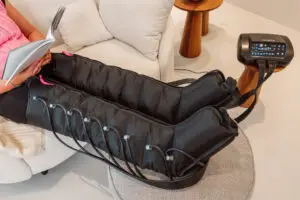
It is a therapeutic method used in medicine to apply compression to the lower and upper limbs, similar to massage movements. This is done using a device that intermittently and successively inflates cuffs that are wrapped around the body parts to be treated.
All this happens according to specific rules related to the study of the pathophysiology of the body and the main laws of physics.
The main benefits, which we will discuss in more detail later, are the reduction of stagnation in venous and lymphatic flow in the treated area. This reduces swelling caused by edema, for example. Other important benefits include the vasodilatory and antithrombotic effects.
Therefore, we will not discuss combating cellulite or orange peel skin in this post. Instead, we will try to see how pressotherapy can help those currently struggling to lead a normal life. The conditions we are about to discuss cause severe pain and enormous difficulty walking or moving around, not to mention the embarrassment caused by the aesthetic problems (e.g., edema) in the evening.
The aim of this therapy
It is intended to relieve the problems of swollen and painful legs, edema, varicose veins, ulcers, etc. caused by problems of venous insufficiency. It is also used in conditions that affect the lymphatic system, called lymphostasis, which lymphedema one of the most famous is.
For example, this condition causes the accumulation of fluids and proteins in the interstitial spaces of the tissues, leading to swelling and deformity of the legs that take on an unattractive columnar appearance, causing a lot of discomfort to the sufferer.
The aim of pressotherapy is to promote the transport of fluids in the body, normalise venous circulation, relieve lymphatic stagnation and thus prevent related conditions.
In practice, pressotherapy replaces or supports the natural movement of currents related to venous or lymphatic problems, or both at the same time.
Since the above mentioned currents move through the lymphatic vessels and veins, following a path from the periphery of the limb to the heart, the correct cycle of action is therefore that of DISTAL-PROXIMAL, that is, from the periphery of the body to the center of the body.
Therefore, of all pressotherapy methods, the sequential method is the most suitable, in which the chambers of the device are inflated and deflated from the periphery of the affected limb towards the core.
This action simulates a blood circulation massage and allows to drain stagnant fluids in the limb.
What exactly does pressotherapy do?
Specialized units (leg gaiters, arm sleeves, abdominal belts, etc.) are used, containing pneumatic compression chambers that inflate, generating controlled compression on the affected body parts (limbs and abdomen). The various parameters are set and activated by the electronic-mechanical-pneumatic device, which delivers the correct air pressure, inflating and deflating the various chambers intermittently and sequentially.
Main therapeutic indications
Below you will find a fairly structured list of the diseases and conditions associated with this therapeutic area.
- Lymphedema
- Hematoma
- Drainage of the arm after mastectomy
- Restoration of muscle tone in immobilized or disabled patients (instead of massage)
- Treatment of hematomas after surgery
- Paralysis of limbs
- Postphlebitic syndrome
- Venous insufficiency
- Post-thrombotic syndrome
- Venous stasis
- Anti-cellulite treatment in the initial phase
- Heavy legs
- Passive compression for venous disorders
- Postoperative prophylaxis in venous thrombosis operations
- Widespread chronic venous edema
- Lipedema
- DVT prevention
- Bedridden patients
If you or your loved ones are experiencing similar issues with one or more of these conditions, I encourage you to continue reading this post. It will undoubtedly be helpful in the future.
Contraindications
Here is a list of conditions and diseases for which you should avoid pressotherapy:
- Acute venous inflammation
- DVT – Deep vein thrombosis
- Malignant tumors
- Erysipelas
- Acute skin inflammation
- Occlusions of arteries
Therapeutic benefits of pressotherapy
Without delving too deeply into the science behind it, it's important to remember that correct use of pressotherapy with professional medical equipment leads to several benefits. These have been scientifically proven over the years.
Some of the most important ones are:
At the biochemical level, the endothelial cells release substances that promote an antithrombotic, vasodilatory and pro-fibrinolytic effect in the treated area.
The movement of fluids increases the speed of blood flow (venous and lymphatic) and reduces stagnation and retention processes.
The increased interstitial pressure reduces the lymphatic load, the lymphatic flow increases, which visibly reduces the edema.
Still on the topic of therapeutic benefits, I'll briefly discuss a published and conducted clinical study. It clearly demonstrates the incredible results that can be achieved with in-home pressotherapy.
Published in 2018, this is the world's first study on the use of home-based pressotherapy in hypomobile patients with disabling edema, conducted by the Unità di Medicina Traslazionale dell'Ospedale Universitario di Ferrara.
reference: http://www.lesionicutaneecroniche.it/PDF/TRATTAMENTO/drenaggio%20linfatico.pdf
The patients suffered from hypomobility due to:
- Neurological disease (multiple sclerosis)
- Severe obesity
- Severe osteoarthritis
The study, conducted on 50 patients over 30 days, showed:
- Circumference reduction at the six detection points
- Reduction of the band/skin thickness
- Reduction of the volume of the lower limbs (edema not displaced!)
- Improved ROM of the ankle joint
- Improved quality of life for all patients who completed the home cycle. Specifically, patients noted improved physical function, overall health, and mental well-being.
- Reduction in the presence of pro-inflammatory cytokines (substances produced in an inflammatory state). This can be considered a marker, i.e., an indicator of predisposition to the disease or condition.
Correct operating pressure
This is still a much-debated topic, but in general, in addition to following our doctor's advice, it's good practice to set the operating pressure between a quarter and half of the maximum capacity. This is to prevent damage to the lymphatic system, veins, or capillaries.
Duration of treatments
Treatments range from 30 minutes to usually no more than two hours. The total number of sessions can vary considerably depending on the type and severity of the condition. For example, in certain cases of lymphedema, a treatment can last from a minimum of 5 hours to over 15 hours per course.
However, the daily frequency of sessions is crucial to achieve effective fluid drainage results and should also be supported by other medical devices, such as the use of elastic compression stockings, bandages and pharmacological therapy.
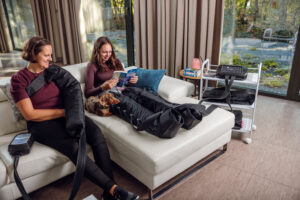
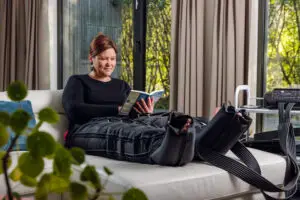
Pressotherapy for home use
Now we'll explore some specific considerations regarding the key aspects and benefits you can achieve by using pressotherapy at home. Together, we'll examine the features a home-use device must have to be suitable for use by "regular" people (excluding healthcare professionals).
I think there are three important factors to consider:
- The reliability of the device
- Ease of use
- affordability
Regarding the first point, I think it's easy to guess what I mean. It's essential to use reliable and safe medical devices. To ensure you've made the right choice, you should check whether the CE or Medical CE mark is present. It's also better to know the manufacturer and ensure that the pre- and after-sales support is reliable and of a high standard.
For point 2, you only need to consider who typically undergoes pressotherapy. The people who often experience the various illnesses and conditions in question are people of a certain age who have little or no confidence in technology or experience with medical devices.
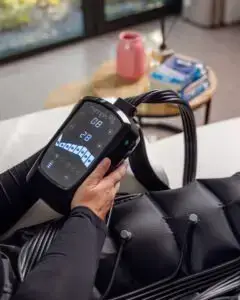
Fortunately, there are home therapy devices available that do everything automatically. All the patient or a caring family member has to do is set the treatment time and the desired pressure level, which, as mentioned, should be well below the maximum permitted value.
Once the parameters are set, the device does the rest.
Considering the above, practically anyone can use it.
Now more than ever, point 3 seems the most delicate to address.
Let me tell you something, there are very professional pressotherapy devices that cost much, much less than half of the devices currently on the market.
I know what you're asking: “Yes, but how much exactly, is it much less than half?”
A good device that covers all the points I mentioned above starts at just over €300. I know, it's not exactly peanuts, but it costs much less than previous models. And, above all, it quickly pays for itself when you consider the average session cost at a specialized center.
The benefits of pressotherapy at home
Consistency in therapy
We've seen before that, in addition to using other tools, it's essential to perform this therapy daily. Being at home, of course, means it will be much easier to adhere to this.
Difficulty walking
Here, one need only consider the nature of the conditions mentioned, the age of the patients, and the difficulty of moving, especially on long journeys. "At home," this problem no longer exists or has been drastically reduced.
Zero km
Not everyone lives in a city center, and not everyone has a specialized center just a few kilometers from home. Not to mention that not everyone has access to a car or transportation, and travel costs are a significant part of the total budget. Being able to attend therapy without having to travel is a huge plus.
Public good
Another major advantage of a pressotherapy device for home use is that it can be used to significantly improve our overall health. This is achieved by preventing or alleviating a range of physical discomforts that burden us every day. Are you an office worker sitting at your desk all day? Are you a shop assistant on your feet from morning till evening? Are you overweight and do not exercise, or do you even walk very little?
One or more sessions will help you restore proper fluid drainage from your body by reactivating your entire circulatory system. All ailments such as tired and swollen legs, pins and needles from poor circulation, etc., will disappear.
Privacy
This aspect might seem a bit irrelevant to you, but consider all those people with advanced lymphedema, who may be overweight. They might feel very uncomfortable undergoing therapy in a public setting. Treating yourself in a familiar environment is the easiest and most comfortable way.
Ready to feel the difference? Book your demo pressotherapy session today. https://www.nymph.be/contact/#free-booking or go to the store!: https://nymph.be/winkel-lymfedrainage-pressotherapietoestellen/
Do you want to get started with pressotherapy yourself? View the compare all Nymph models and discover which device suits your situation.